
News
뉴스
[Interview – Jonathan Spink, COP Korea CEO]
Participation in Haewoori 2 & 3 Projects in the First-Half Wind Power Auction
Localization Strategy Driven by Partnerships with Domestic Companies
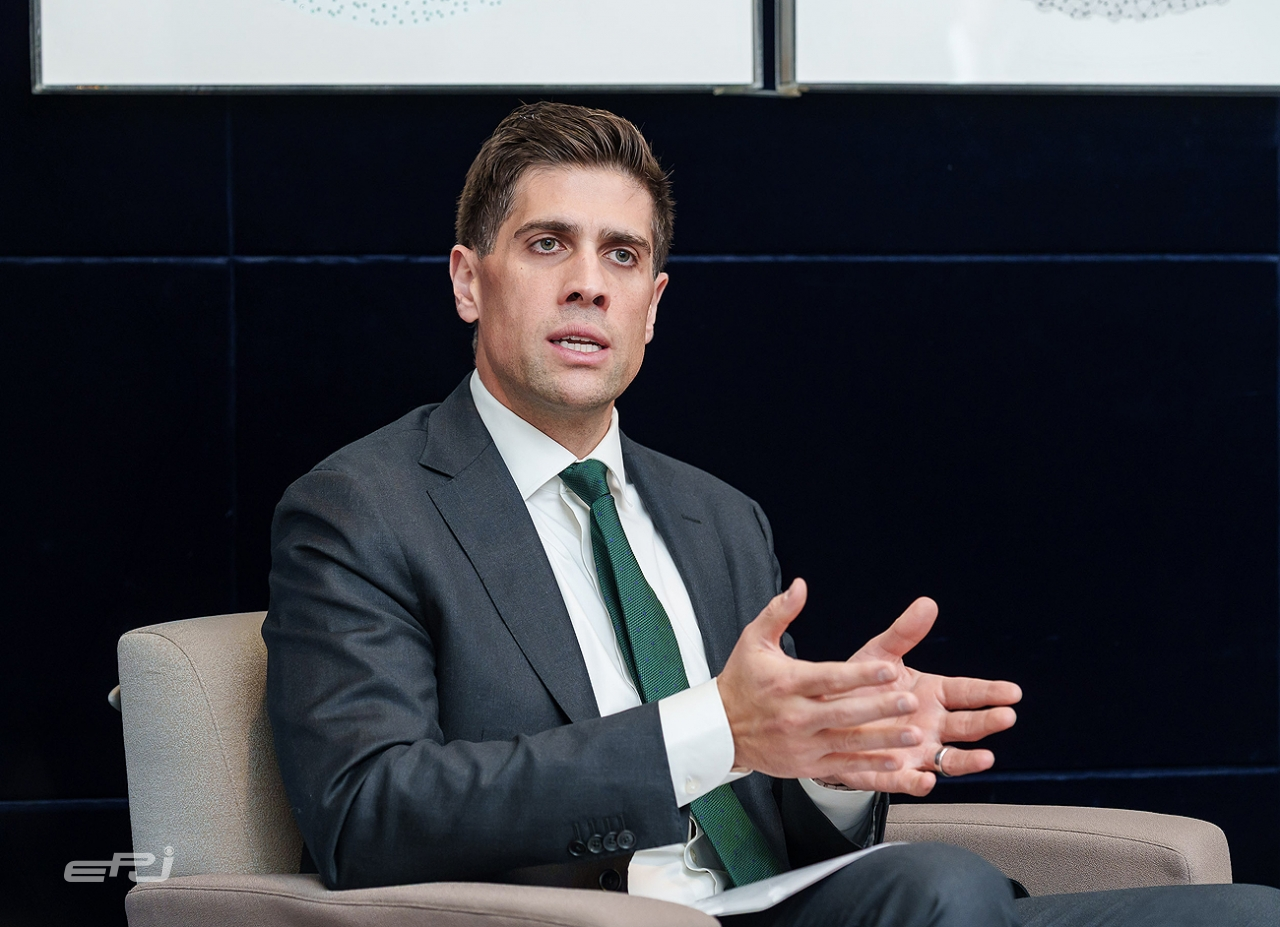
With rising development costs, supply chain shortages, and policy uncertainties slowing down Korea’s offshore wind market, this is a critical moment that calls for companies capable of turning crisis into opportunity.
In particular, floating offshore wind – bearing greater risks in technology, cost, and supply chain compared to fixed-bottom projects – remains at an early stage globally, making it rare to find companies willing to commit to large-scale development. Against this backdrop, Copenhagen Infrastructure Partners (CIP)’s announcement to participate in the floating offshore wind segment of this year’s first-half competitive tender with Haewoori Offshore Wind 2 & 3 projects, a total capacity of 1GW, has drawn significant attention. The move carries meaning beyond simple project development, as it signals a large-scale push for floating offshore wind in Korea, a technology hailed as a global game-changer.
CIP already has extensive offshore wind experience, with large-scale projects operating in the U.S. and Taiwan, and is currently developing and managing 11 offshore wind projects totaling 4.9GW in Korea. Notably, the first phase of the Jeonnam Offshore Wind 1 (96MW), which began commercial operation in May last year, made waves by completing project financing based solely on the project’s own credit without requiring corporate guarantees.
Under Korea’s current government wind power auction evaluation system, project selection combines scores from a first-round review of non-price factors such as industrial and economic impact, and a second-round review of bid price. This makes partnerships with domestic supply chain companies crucial. The government’s policy goal of expanding offshore wind deployment while fostering the related industrial ecosystem means such partnerships can be decisive in tender outcomes.
Having implemented diverse localization strategies across global offshore wind projects, CIP plans to establish the broadest possible partnerships with Korean companies in developing the Haewoori Offshore Wind projects.
We spoke with Jonathan Spink, CEO of Copenhagen Offshore Partners (COP) Korea – a global offshore wind development company with mutual partnership with Copenhagen Infrastructure Partners (CIP) – about the development and its direction of the Haewoori floating offshore wind projects.
Creating a Virtuous Market–Supply Chain Ecosystem to Lower Development Costs
“As seen from the scale of floating offshore wind currently in operation worldwide, the industry is still at an early stage, so development costs are inevitably high. However, looking at the trajectory of fixed-bottom offshore wind’s LCOE (Levelized Cost of Energy), once a market of sufficient size is established and economies of scale are realized, floating offshore wind development costs are also expected to decrease. To achieve this, a virtuous ecosystem must be built—accumulating project track records while expanding opportunities for supply chain companies to participate.”
Spink explained that given the current market situation, it will be difficult to reduce floating offshore wind development costs in the short term. Nevertheless, he emphasized the need to actively pursue market expansion with a view to future growth potential.
In other words, considering the sustainable social and economic benefits that floating offshore wind expansion can bring, now is the time to focus on improving development conditions that can grow the market—such as infrastructure expansion, appropriate ceiling prices, and streamlined permitting.
Spink added, “Floating offshore wind projects are larger in scale compared to fixed-bottom, so the job creation effect is also greater. If market expansion and long-term operations continuously generate quality jobs, investor confidence in floating offshore wind will rise, which in turn strengthens the competitiveness of the local industrial ecosystem.”
He further stressed, “Above all, to expand the floating offshore wind market, the government must eliminate policy uncertainty and enhance predictability. In the case of government wind auctions, providing clarity on evaluation criteria, announced capacity, and ceiling prices are essential. This predictability enables developers to expand their pipelines consistently, making continuous project development possible.”
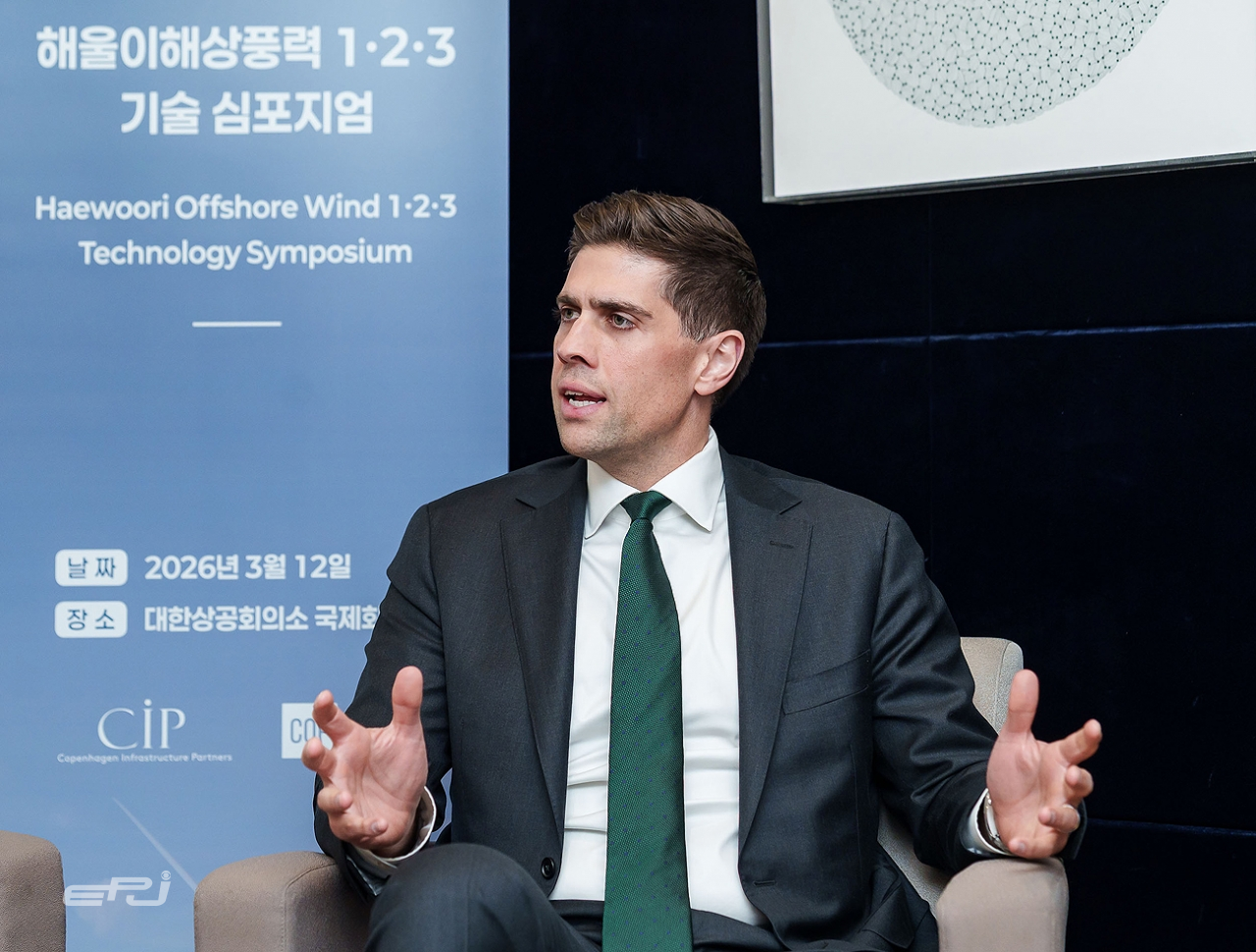
Floating Offshore Auction Ceiling Price Must Exceed 176.5 KRW
COP plans to ensure the stable advancement of the Haewoori Offshore Wind Project – expected to drive Korea’s offshore wind expansion – by effectively deploying available specialists while broadening cooperative efforts with Korean supply chain companies.
Spink noted, “Offshore wind experts with over 30 years of experience and know-how are participating in diverse projects worldwide. Once Haewoori Offshore Wind Project begins its development in earnest, overseas engineers with deep understanding of the Korean market will also join.”
He added, “We are exploring various ways to give Korean supply chain companies opportunities to participate in floating offshore wind through the Haewoori Offshore Wind Project. In particular, we plan to collaborate as much as possible with Korean firms on the design and fabrication of floating substructures. Korea is a powerhouse in shipbuilding, so we intend to leverage partnerships with companies that have related technological capabilities to localize floating structures.”
Ahead of the Haewoori Offshore Wind Project, COP also intends to strengthen its capabilities through the Pentland Floating Offshore Wind Farm (92.5MW) in Scotland, where 15MW-class large offshore wind turbines will be installed for the first time.
Spink stated, “If the Haewoori Offshore Wind is selected in this year’s first-half auction and no significant delays occur during subsequent processes such as REC contracts and permitting, we expect the Final Investment Decision (FID) around Q1 2028. Considering the still-heavy CAPEX burden in floating offshore wind development, this year’s auction ceiling price must be set above 176.5 KRW per kWh—the level of the first floating offshore ceiling price in 2024.”
 목록으로
목록으로